
> GENERATING TERRAIN CHUNKS...
0%
TIP: 24-HOUR NON-STOP BUILD SPRINT AHEAD

TIP: 24-HOUR NON-STOP BUILD SPRINT AHEAD


“BREAK CODE. FORGE REALITY. ELEVATE TOMORROW.”
The flagship annual STATE technology festival and hackathon organized by CODEBREAKERS,an official Coding and Technical club of Government College of Engineering Kalahandi. 24 hours of intense prototyping, competitive engineering, and breakthrough innovation.

Explore the technical dimensions powering HACKVERSE '26. From Overworld AI systems to Nether cybersecurity combat.
Colleges and organisations run hundreds of fans, tube-lights, ACs, and other electrical loads that are frequently left running in empty rooms, driving up electricity bills and wearing out equipment faster than necessary. This problem calls for an AI-powered, occupancy-aware system that automatically manages electrical loads and gives facility teams real-time visibility into where energy is actually being wasted.
Major temples like Puri Jagannath or Konark see huge, unpredictable crowd surges, especially during festivals, but have no simple way to know current footfall or queue length until the crowd is already unmanageable. This problem calls for a straightforward IR-sensor-based system that counts pilgrims in real time and helps manage queues before they become a safety risk.
Students, fresh graduates, and job seekers struggle to discover relevant opportunities, understand companies, prepare for interviews, and identify the skills needed for their target roles — while existing job portals only list vacancies and leave everything else to the candidate. This calls for a centralized, AI-driven Career Intelligence Platform that unifies job discovery, company research, interview preparation, skill-gap analysis, and application tracking into one intelligent ecosystem, while giving institutions a real-time view of student employability.
Manufacturing businesses typically run production, inventory, procurement, workforce, quality control, and finance through disconnected systems and manual processes, leaving management with no real-time, unified view of operations. This problem calls for a centralized, AI-driven Smart Manufacturing ERP that connects every core business function on one platform while using AI to predict failures, optimize production, and automate routine decisions.
Many schools in rural and low-connectivity areas lack updated computer infrastructure, reliable internet, and access to quality digital educational content, widening the gap between rural and urban education standards. This problem calls for a mobile and web learning app that works genuinely offline and in local languages.
Farmers today need three different kinds of support that are rarely offered together: day-to-day crop guidance, early warning against risks that could wipe out a harvest, and smart decisions about what to grow and where to sell it. This problem calls for a single AI copilot that covers the entire journey — from sowing advice, through risk monitoring, to the final sell decision — instead of forcing farmers to piece together three different tools.
Colleges want to track and reduce their environmental footprint — energy, water, waste, and transport — but have no structured tool to actually measure it, motivate improvement, or produce the reports accreditation bodies expect. This problem calls for a campus sustainability app that captures utility data, scores performance, gamifies reduction efforts, and auto-generates audit-ready reports.
Most fitness apps suffer from high drop-off rates because they assume expensive wearables, push unrelatable Western diets, and offer no real local community engagement. This problem calls for an AI-driven, zero-hardware fitness platform tailored to the Indian and specifically Odia context — using just a smartphone camera for exercise tracking and building around local dietary staples and community-driven motivation.
Solar photovoltaic (PV) power plants routinely experience drops in expected energy generation, forcing operations and maintenance (O&M) teams to spend critical hours manually identifying the root cause. This problem calls for an intelligent, telemetry-driven diagnostic engine that continuously compares expected versus actual generation, isolates the underlying failure mode, and delivers direct, prescriptive recommendations to maximize energy yield and asset life.
Small-town and rural hospitals often run at less than half their required doctor strength, forcing patients into long, often futile trips for care. This problem calls for a multilingual telemedicine solution built for genuinely low-connectivity rural conditions.
Coastal and flood-prone regions face multiple, overlapping hazards — cyclones, floods, droughts, heatwaves, lightning, landslides, and storm surges — but early-warning systems usually stop at 'a warning was issued,' not 'here is what will happen where, and what to do about it.' This problem calls for an AI-powered, geospatial platform that turns real-time hazard data into location-specific risk assessments and actionable response decisions across multiple disaster types at once.
Compete for a total cash bounty of ₹35K+ along with server compute credits, exclusive developer swag, direct internship referrals, and prestigious winner trophies.
Every team presenting a functional project receives verified STATE participation certificates, custom pixel sticker packs, cloud computing infrastructure credits, and food passes.
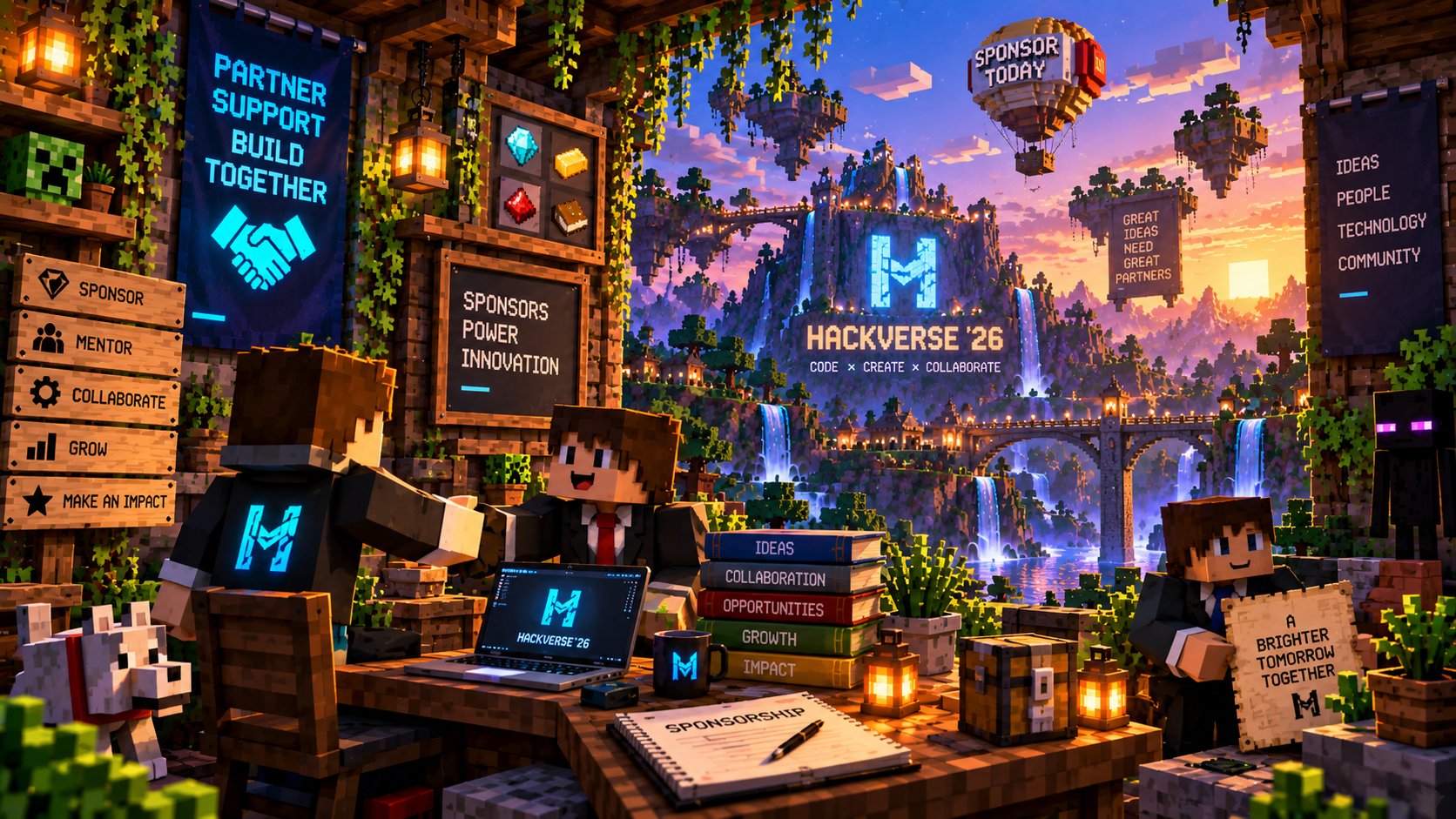
Backed by visionary technology enterprises and developer ecosystems empowering HACKVERSE '26. Click any partner logo to visit their website!

CodeBreakers is the premier student-led technical body of Government College of Engineering Kalahandi. As builders who develop and deploy the institute's digital infrastructure and manage flagship college events like INSPRANO and UDAAN, we created HACKVERSE '26 to give developers nationwide a pure, non-stop platform to build real software.
Regular 9-Lock and CodeChef contests.
Production systems shipped for 5000+ users.
Seniors & alumni guiding juniors daily.
Kandha Bando Pala, Bhawanipatna, Kalahandi, Odisha - 766002


Heartfelt thanks to all 500+ participants, 60+ squads, mentors, and partners across Odisha. Get ready for an even bigger battlefield in HackVerse 2.0.